
Why Do Dogs Bark in Their Sleep?

You’re relaxing on the couch when your snoozing dog suddenly lets out a muffled bark, a whimper, or even a soft howl — eyes still closed, paws twitching. It’s startling the first time you hear it, but is it something to worry about? Why do dogs bark in their sleep?
Why Do Dogs Bark in Their Sleep? – The Short Answer
Most dogs bark in their sleep because they’re dreaming. During REM (rapid eye movement) sleep, a dog’s brain stays active even though its body is mostly relaxed, which can produce barks, whines, twitches, or howls. This is normal and healthy in occasional episodes. It’s worth mentioning to your vet only if the vocalizations are new, frequent, intense, or paired with other changes in behavior, appetite, or energy.
Key Takeaways
- Barking, whining, and howling during sleep are usually tied to REM sleep and dreaming.
- Small dogs tend to vocalize more often in their sleep than large breeds, simply because they cycle through REM sleep more frequently.
- Occasional sleep sounds are not a reason to wake your dog or worry.
- Sudden, new, or escalating sleep vocalizations — especially alongside daytime changes — are worth a vet visit.
- Tracking your dog’s rest, activity, and vital signs over time helps you notice when something has genuinely changed.
Why Do Dogs Bark in Their Sleep?

Dogs cycle through stages of sleep much like people do. After settling in, they pass through slow-wave sleep, when the brain is quieter and muscle tone is still fairly active, and then into REM sleep, a deeper stage marked by rapid eye movements and much more active brain waves. According to VCA Animal Hospitals, during REM sleep a dog’s muscles relax but the brain becomes highly active, which is when whining, barking, tail wagging, faster breathing, and leg twitching tend to show up.
Because a sleeping dog’s brain during REM looks a lot like a dog’s brain during an eventful waking moment, most veterinarians agree the simplest explanation is dreaming — and a bark is just the outward evidence of whatever is playing out in that dream.
Why Do Dogs Cry, Whimper, or Whine in Their Sleep?
Whimpering and whining during sleep come from the same REM activity as barking. A dog’s nervous system doesn’t fully distinguish between “acting out” a dream and reacting to a real event, so a dream involving excitement, mild fear, or frustration can produce a soft cry or whine, even though nothing is actually happening. On its own, occasional whimpering during sleep is considered a normal part of the dream cycle rather than a sign of pain.
“I got the Maven sensor for my 14-year-old Chihuahua mix with heart and trachea issues. It gave me back peace of mind – I can track her RRR, BPM, drinking, and activity anytime and know instantly if something’s wrong. Highly recommend!”

★★★★★
Chiara De Luca
Titti
Why Do Dogs Howl in Their Sleep?
Howling is a natural vocalization dogs also use while awake — to respond to sounds, communicate with other dogs, or express feelings like isolation, according to Texas A&M’s College of Veterinary Medicine & Biomedical Sciences. It isn’t surprising, then, that a dream involving a triggering sound or social interaction might prompt the same response during sleep. Like barking and whining, an occasional sleep howl is generally just dream-related and not a red flag by itself.
Are Dogs Dreaming When They Vocalize?
Researchers can’t ask a dog what it dreamed about, but the physiological evidence points strongly toward yes. As Texas A&M’s Pet Talk service explains, dogs do experience the REM sleep phase associated with dreaming in people, and the leg movements, facial twitching, vocalizations, and tail movements seen during this stage are consistent with dream activity, according to Texas A&M Pet Talk. VCA Animal Hospitals notes that because the sleeping brains of dogs and people go through similar stages of electrical activity, it’s reasonable to conclude dogs dream much as we do.
When Are Sleep Vocalizations a Cause for Concern?

Occasional sleep sounds are part of a normal, healthy sleep cycle. It’s worth paying closer attention when:
- The vocalizations are new or sudden, especially in an older dog
- Sounds become more frequent, louder, or more distressed over time
- They’re paired with daytime changes, such as increased wandering, disorientation, house soiling, or reduced interest in play
- Your dog seems unusually restless, has trouble settling, or wakes frequently
The American Veterinary Medical Association lists changes in sleep patterns alongside increased barking, disorientation, and house soiling as behaviors that can signal an underlying health issue in aging pets, and recommends contacting your veterinarian when you notice these changes. In younger dogs, sleep-related thrashing or vocalizing that’s unusually vigorous can also point toward a rarer sleep disorder rather than ordinary dreaming, so a vet visit is reasonable if something feels off.
Should You Wake a Dog That Is Barking or Crying in Their Sleep?
In most cases, it’s best to let your dog sleep through it. Dreaming is a normal, healthy occurrence, and both dogs and humans benefit from uninterrupted sleep. If you do wake a dog mid-dream, especially abruptly, it can startle them and occasionally trigger a reflexive snap before they’re fully aware of their surroundings. Instead, give your dog a quiet, comfortable place to rest and let the episode pass on its own — reserving your attention for whether these episodes are becoming more frequent or intense over time.
How Maven Helps
Because a single sleep-barking episode is rarely meaningful on its own, what matters more is whether your dog’s overall rest and health patterns are shifting over time. The Maven Pet Health Monitor is built to help owners spot exactly that kind of change:
- Tracks rest continuously, establishing your individual dog’s normal sleep patterns
- Monitors activity levels, helping identify daytime changes that may accompany altered sleep behavior
- Measures heart rate trends for additional insight into overall wellness
- Tracks resting respiratory rate, helping flag physiological changes that may accompany illness or discomfort
- Monitors water intake (for dogs), adding context when sleep changes appear alongside other behavioral shifts
- Builds a personalized baseline unique to your dog’s normal routines
- Sends alerts when meaningful deviations occur, such as increased rest, reduced activity, or changes in resting respiratory rate

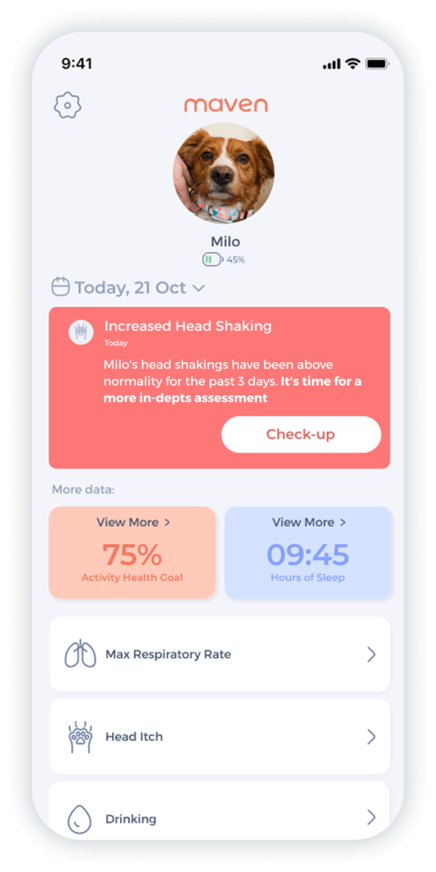
Monitor heart rate, respiratory rate, activity & rest, drinking, itch behavior.
Maven can’t tell you what your dog is dreaming about, but by tracking these patterns continuously, it can help you recognize when a sleep-time sound is just an isolated dream and when it lines up with a broader change worth discussing with your vet.
As Maven Pet veterinarian Dr. Carolina Domingues puts it: “Occasional barking or whimpering during sleep is usually a normal part of dreaming. More important than a single episode is noticing whether your dog’s overall sleep habits, activity, or other health patterns are changing over time.”
FAQ
Most sleep barking happens during REM sleep, when the brain is active even though the body is mostly relaxed — a sign your dog is likely dreaming.
Whining and crying during sleep stem from the same REM dream activity as barking and are usually harmless on their own.
Howling is a natural vocalization dogs use while awake, and it can show up during a vivid dream involving sounds or social interaction.
Generally no — let them finish the dream cycle undisturbed, and avoid waking them abruptly since it can startle them.
Pay attention if the sounds are new, increasingly frequent or intense, or occur alongside daytime changes like disorientation, house soiling, or reduced activity — these warrant a vet visit.
Conclusion
A bark, whimper, or howl in the middle of the night is, in almost every case, just your dog living out a dream. The real value for owners isn’t decoding any single episode — it’s noticing when your dog’s broader rest, activity, and health patterns start to shift. Tools like the Maven Pet Health Monitor make that easier by tracking your dog’s baseline over time, so you know when a nighttime noise is nothing more than a dream, and when it’s worth a call to your veterinarian.
Maven Pet focuses on improving the quality of life of our pets with technology, using artificial intelligence (AI) to enable proactive pet care. By accurately collecting and monitoring pet data 24/7 and flagging any irregularities, Maven Pet empowers pet parents and veterinarians to stay ahead of potential health issues, ensuring the well-being and longevity of our beloved companions.